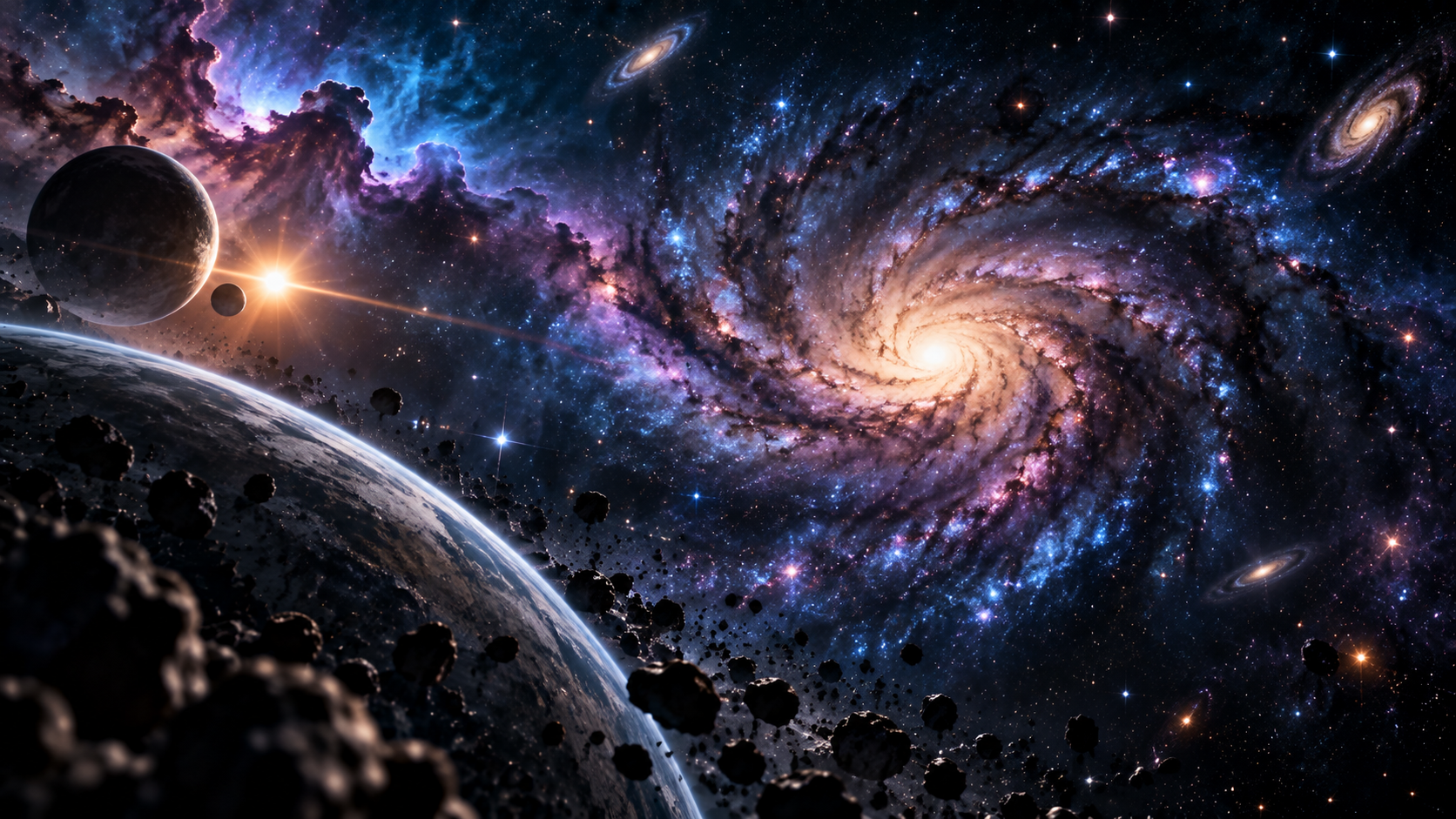
DEEP
SPACE
Enter the frontier beyond planets and moons — a universe of galaxies, nebulae, black holes, exoplanets, and phenomena still waiting to be understood.
Cosmic Scale
A universe beyond imagination.
Milky Way
100–400B
Estimated number of stars
Observable Universe
93B ly
Approximate diameter
Known Exoplanets
6,000+
Confirmed worlds beyond our Sun
Light Speed
299,792 km/s
Speed of light in vacuum
The Deep Universe
Systems on a
cosmic scale.
Deep space is not empty. It contains enormous structures, extreme environments, and countless worlds separated by unimaginable distances.
Nebulae
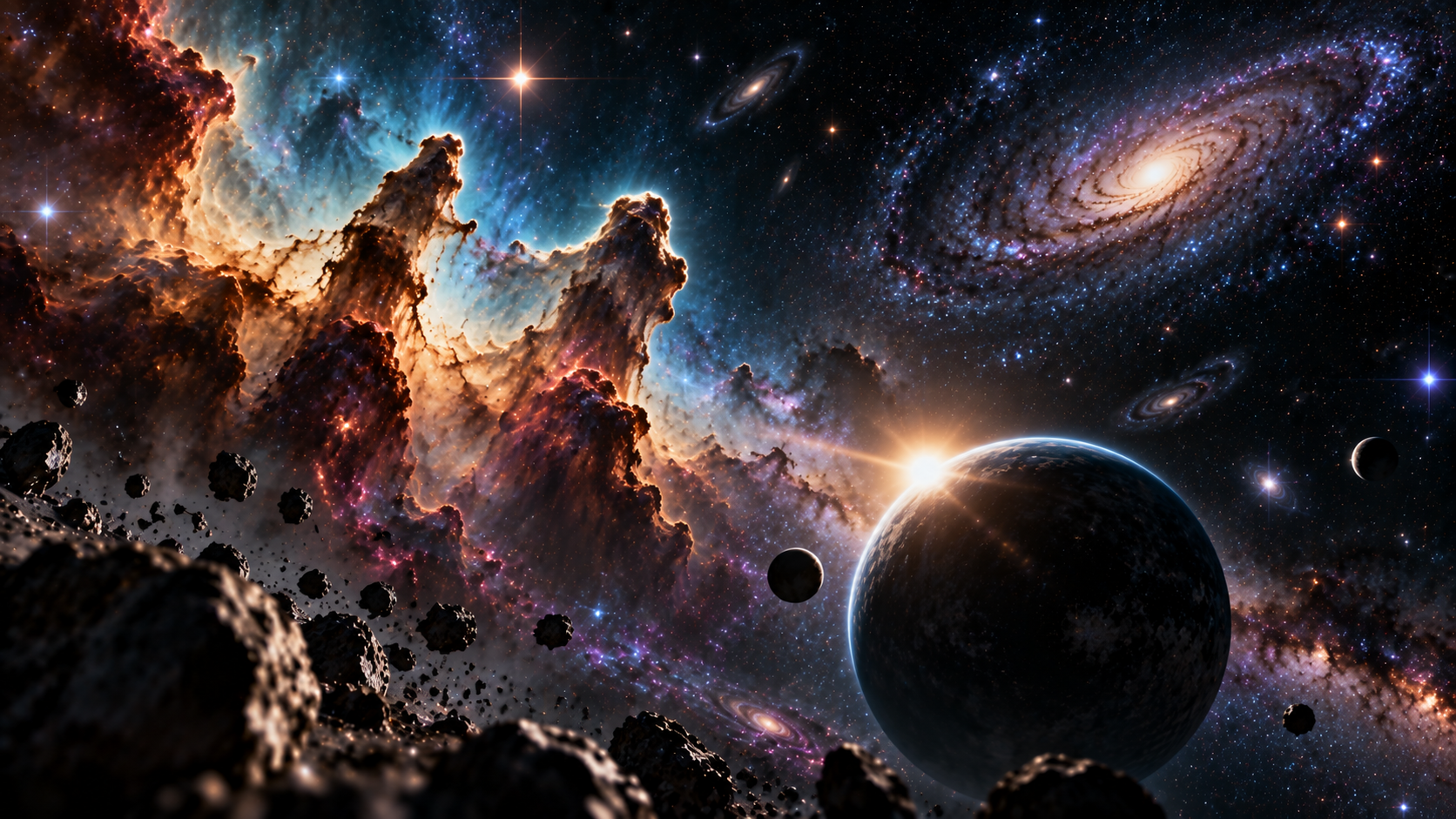
Vast clouds of gas and dust where stars are born, evolve, and sometimes leave behind spectacular remnants.
Galaxies
Enormous gravitational systems containing stars, planets, gas, dust, dark matter, and supermassive black holes.
Black Holes
Regions of spacetime where gravity becomes so intense that even light cannot escape beyond the event horizon.
Exoplanets
Worlds orbiting stars beyond our Solar System, ranging from giant gas planets to potentially rocky worlds.
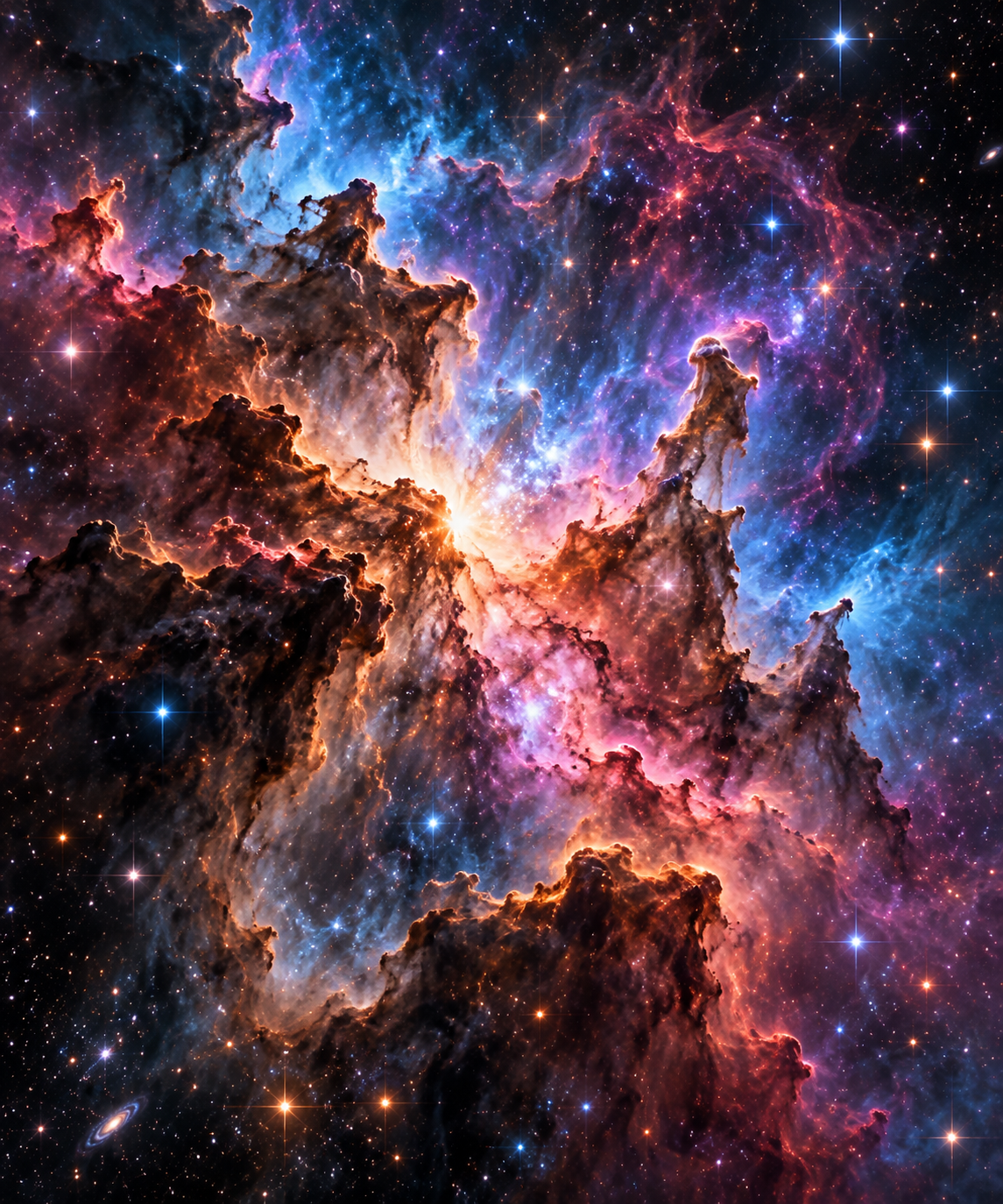
Stellar nurseries
Nebulae
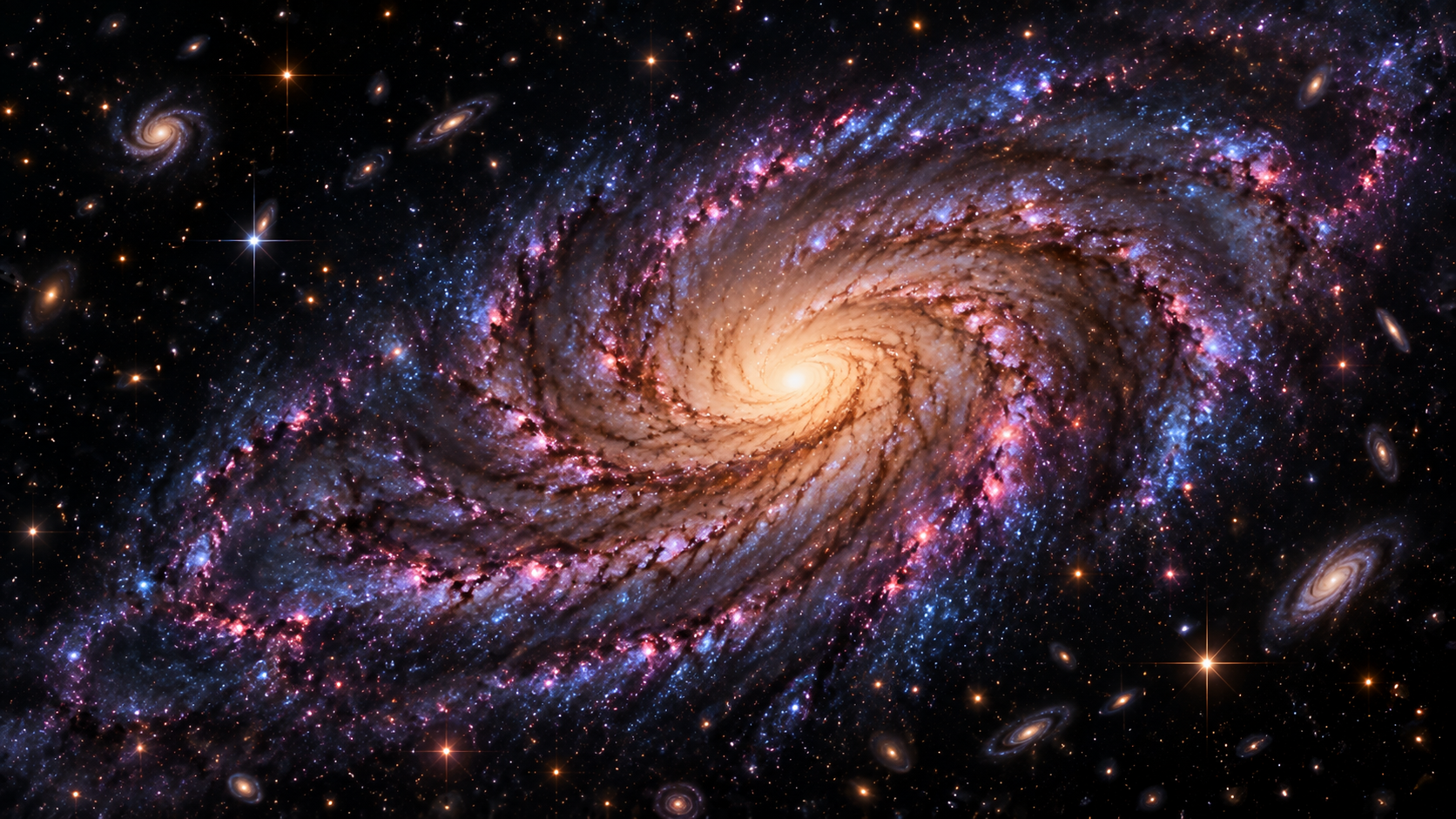
Islands of stars
Galaxies
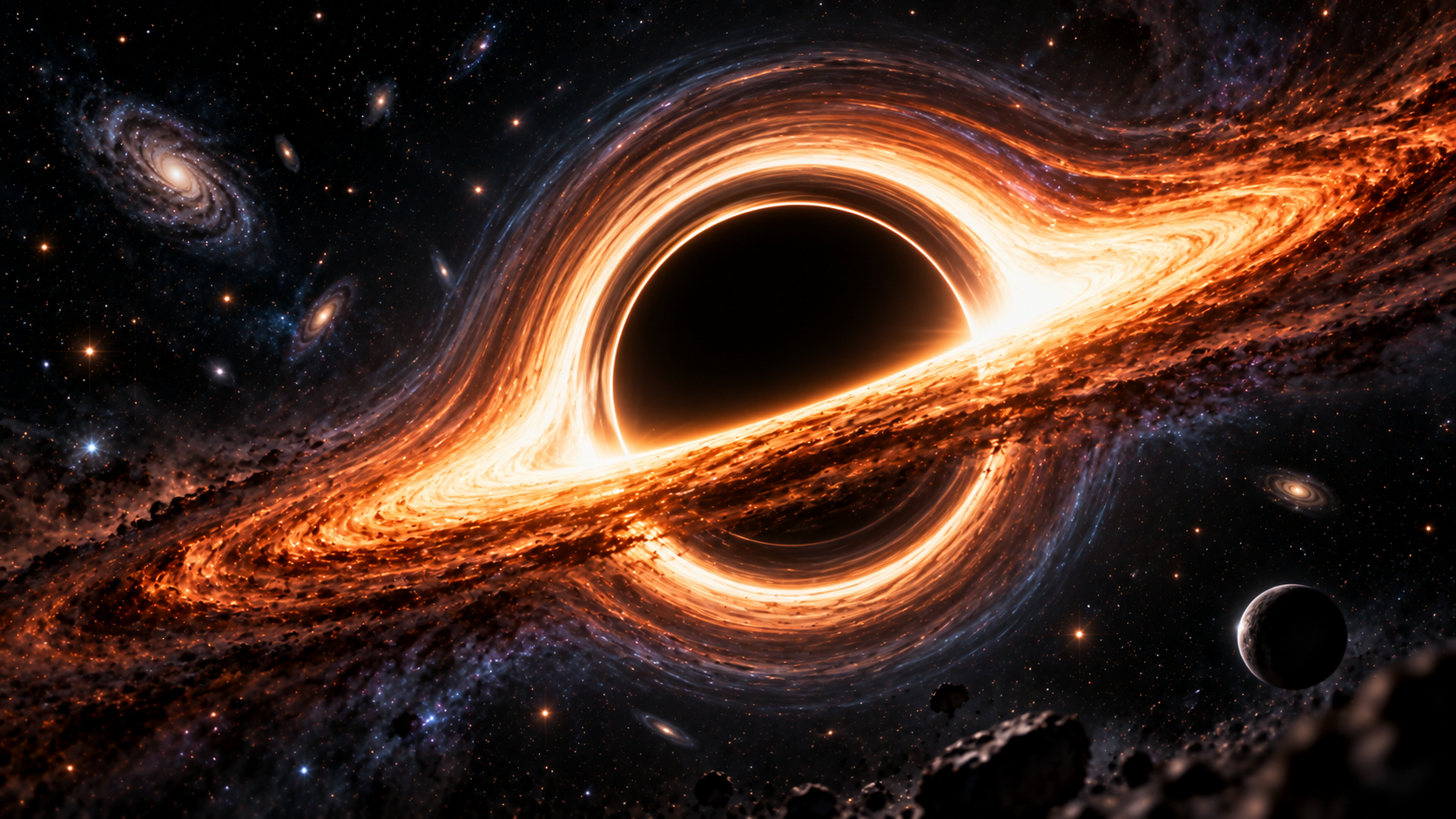
Gravity beyond limits
Black Holes
Did You Know?
The strange side of the universe.
01
The universe is expanding
Distant galaxies are generally moving away from one another as space itself expands.
02
Looking into space means looking back
Because light takes time to travel, telescopes observe distant objects as they existed in the past.
03
Stars have life cycles
Stars are born from collapsing clouds of gas and eventually evolve into different remnants depending on their mass.
04
Some worlds have no star
Astronomers have evidence for free-floating planets that travel through space without orbiting a star.
Extreme Physics
Where gravity
bends reality.
Black holes are among the most extreme objects known. Their powerful gravity can distort space and time and influence everything around them.
Event Horizon
Spacetime
Worlds Beyond
Thousands of worlds.
Countless possibilities.
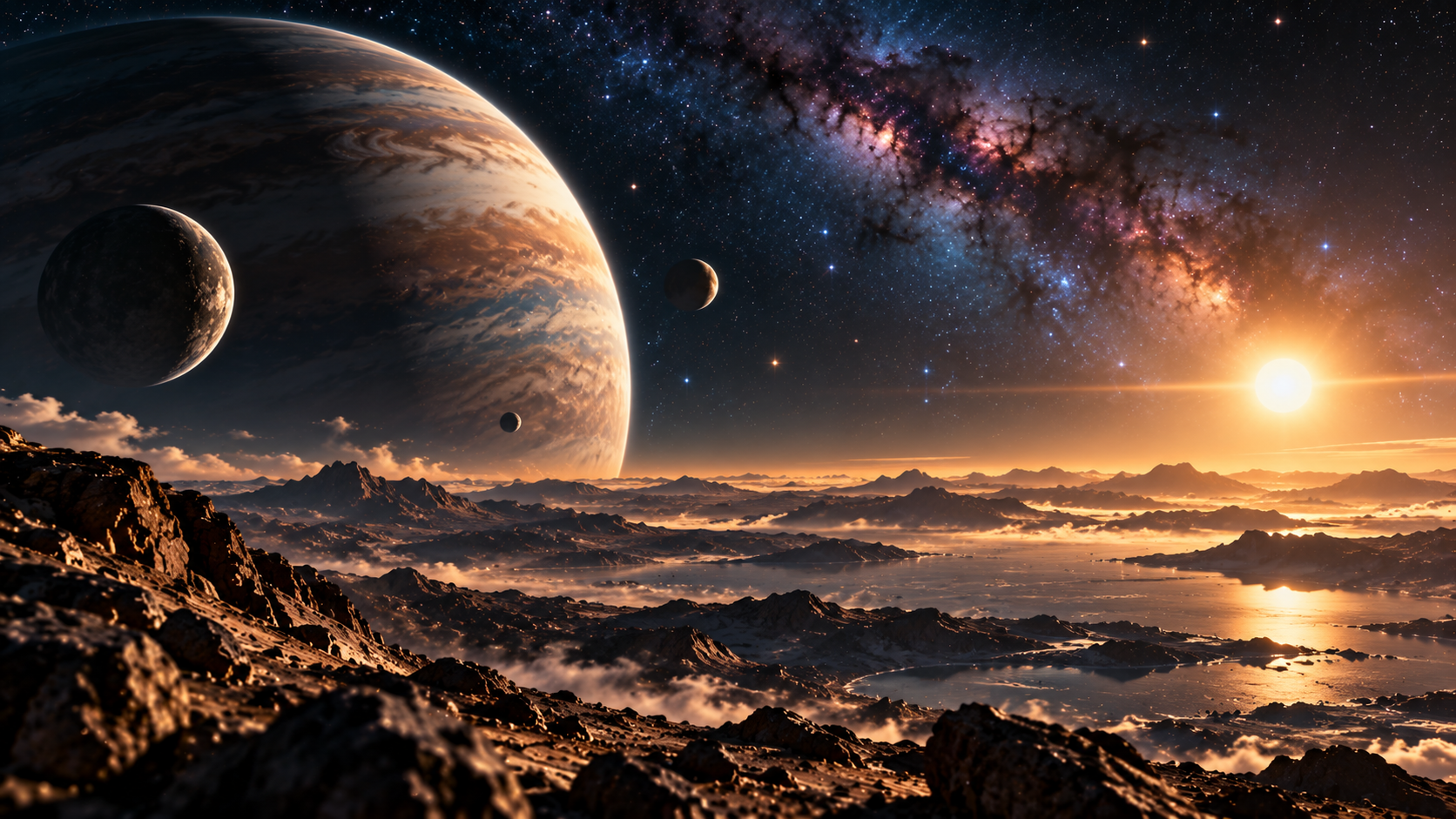
Exoplanet research allows astronomers to study planets orbiting stars beyond our Solar System. Some are enormous gas giants, while others may have rocky surfaces and environments worth investigating.
Planet Detection
Scientists can detect distant planets by observing their effects on their host stars.
Atmospheric Studies
Powerful observatories can investigate the atmospheres of some distant worlds.
Observing the Invisible
Every telescope
is a time machine.
The farther away an object is, the longer its light takes to reach us. Deep-space observatories therefore allow scientists to study earlier chapters of cosmic history.
Human Curiosity
Our journey into deep space.
1610
Galileo's Telescope
Early telescopic observations revealed that the night sky contained far more detail than the naked eye could see.
1929
An Expanding Universe
Observations of distant galaxies helped establish the evidence that the universe is expanding.
1990
Hubble Space Telescope
Hubble transformed deep-space astronomy by observing the universe from above Earth's atmosphere.
2021
James Webb Space Telescope
JWST opened new infrared views of distant galaxies, stellar nurseries, exoplanets, and the early universe.
Future
Beyond the Solar System
Future observatories and spacecraft may investigate distant worlds and push human exploration farther into space.
The Next Frontier
We have only
begun looking out.
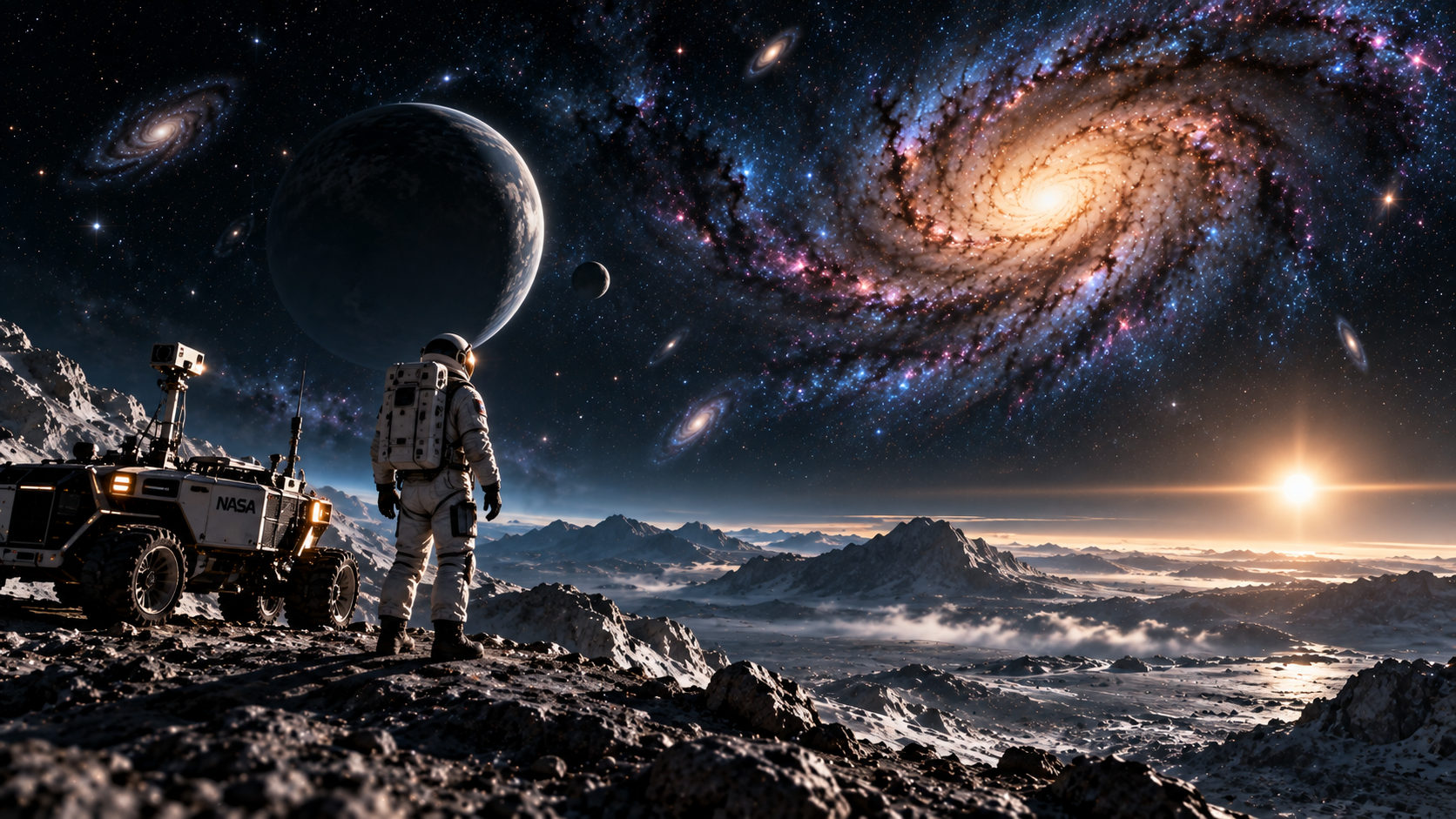
Future observatories, advanced propulsion systems, and new scientific instruments could dramatically expand our ability to study worlds and structures beyond the Solar System.
Continue Exploring