LUN-01
Lunar Surface
Craters + Highlands
The Moon's surface contains ancient impact craters, mountains, valleys, plains and enormous impact basins.
Earth's companion.
An ancient world.
Our nearest frontier.
Explore the Moon's violent geological history, strange environment and continuing role in humanity's return to deep space.
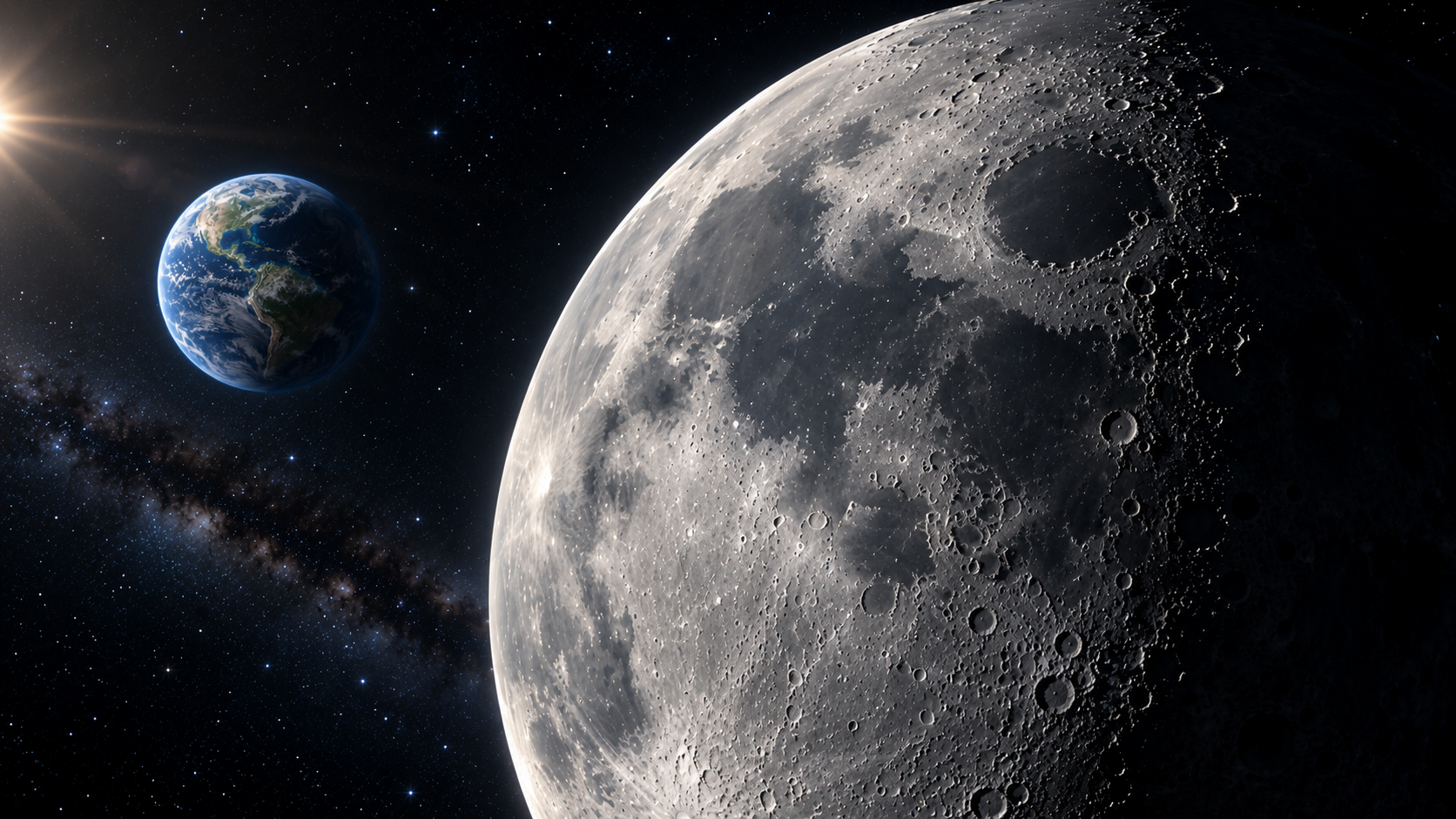
VISUAL ARCHIVE
LUNA / ORBITAL VIEW
Lunar observation
DIAMETER
3,474 km
About 27% of Earth's diameter
AVERAGE DISTANCE
384,400 km
Approximate distance from Earth
SURFACE GRAVITY
1.62 m/s²
About 16.5% of Earth's gravity
ORBITAL PERIOD
27.3 DAYS
Sidereal orbital period
LUNAR SYSTEMS
The Moon preserves an extraordinary geological record. Its surface has been shaped by impacts, ancient volcanism and billions of years of exposure to space.
Craters + Highlands
The Moon's surface contains ancient impact craters, mountains, valleys, plains and enormous impact basins.
-173°C → +127°C
Without a substantial atmosphere to distribute heat, lunar surface temperatures can change dramatically between day and night.
Same Face
The Moon rotates once on its axis in roughly the same time it takes to orbit Earth, so we generally see the same hemisphere.
4.5 B Years
With little atmosphere and no active weather system like Earth's, the lunar surface preserves evidence of ancient impacts.
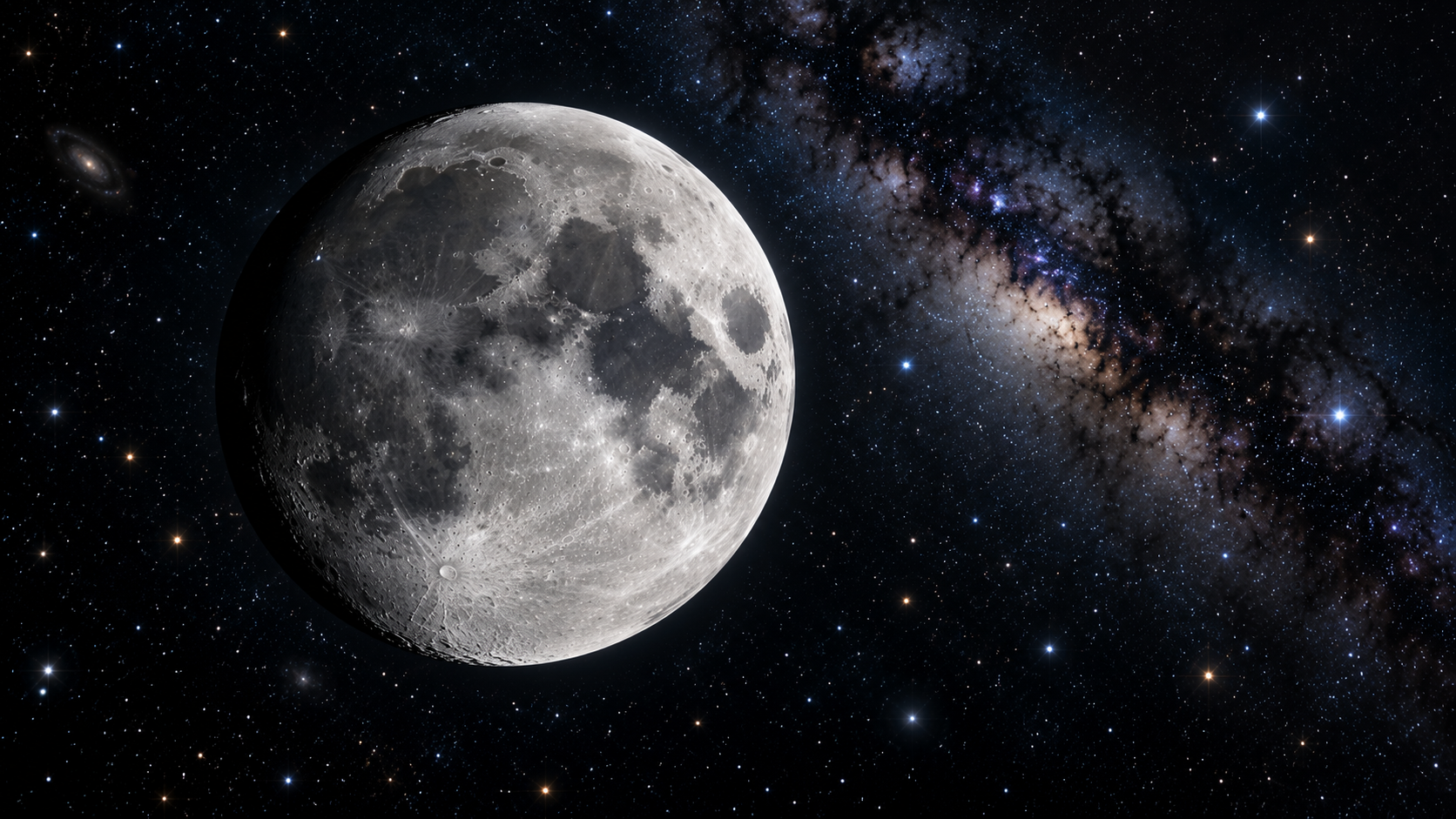
VIEW 01
Moon in Space
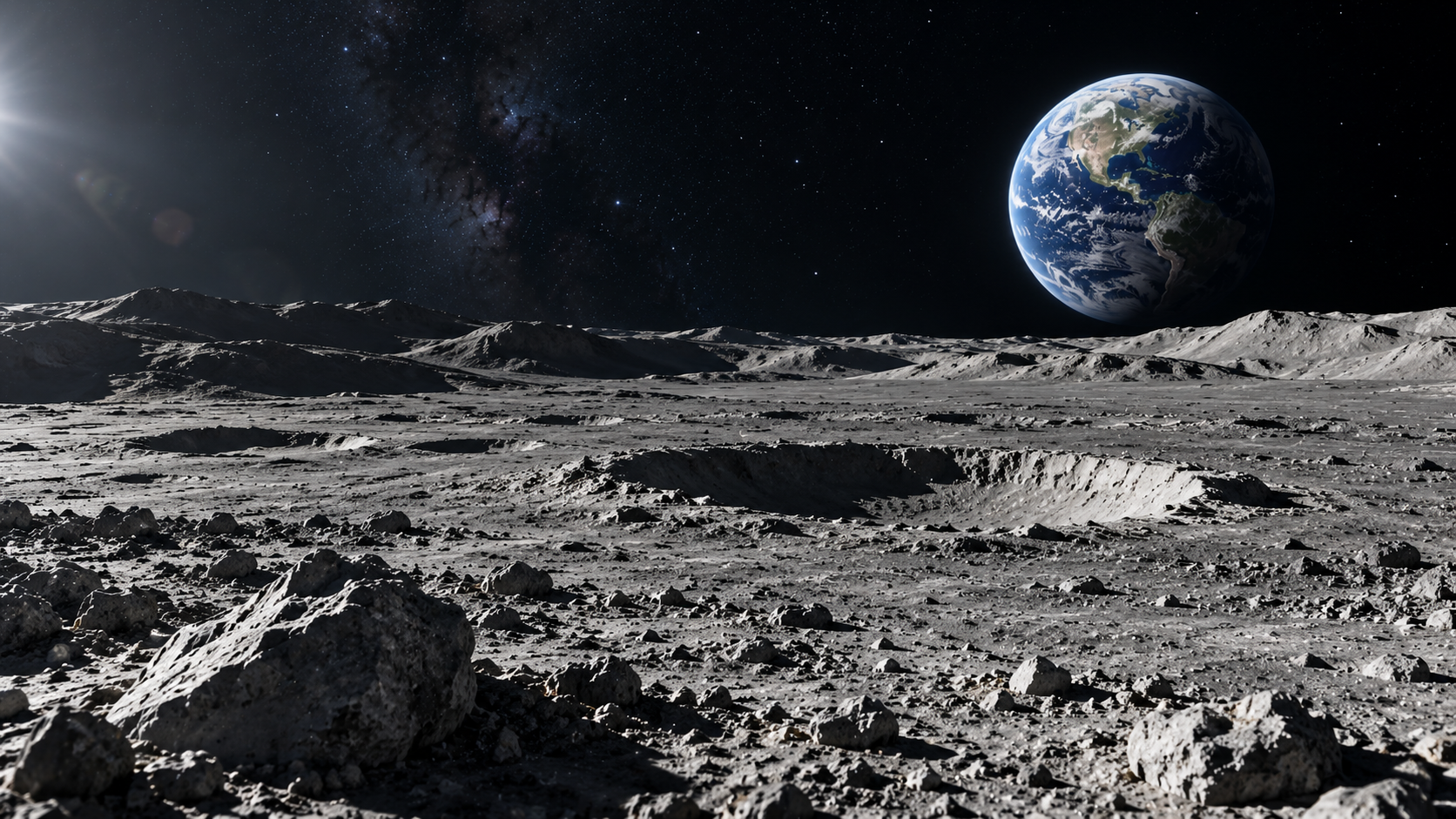
VIEW 02
Lunar Surface
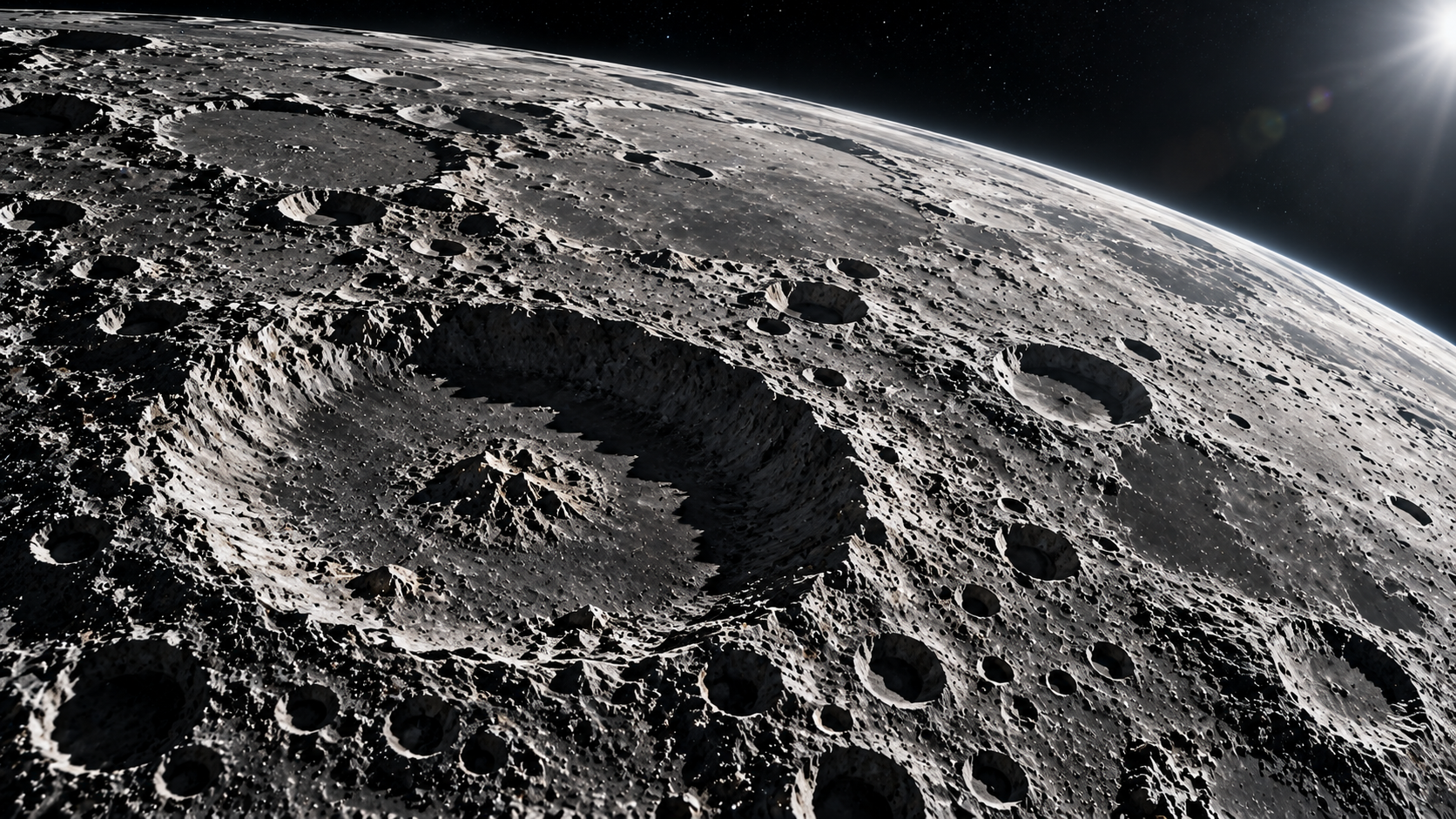
VIEW 03
Impact History
LUNAR KNOWLEDGE
Our closest celestial neighbor contains some of the strangest environments humans have ever explored.
It is the largest natural satellite relative to the size of its host planet in the Solar System.
The Moon has an extremely thin exosphere, so there are no Earth-like winds, clouds or rain shaping its surface.
With virtually no wind or rain to erase them, marks left by astronauts can remain preserved on the lunar surface.
The gravitational pull of the Moon is one of the main drivers of Earth's ocean tides.
The average distance between Earth and the Moon increases by roughly a few centimeters each year.
The far side of the Moon receives sunlight too. It simply faces away from Earth because of synchronous rotation.
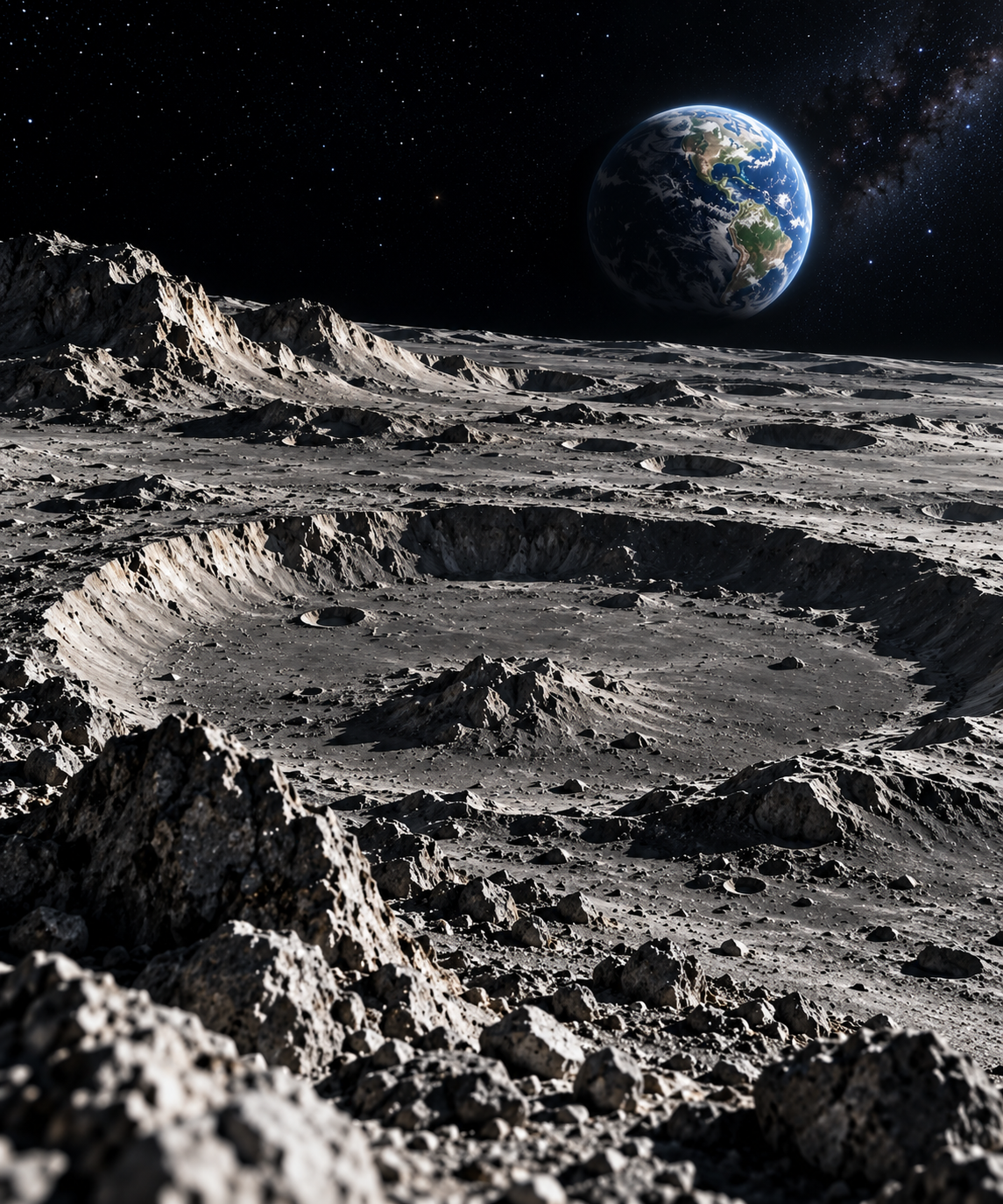
LUNAR GEOLOGY
An ancient surface
SURFACE ARCHITECTURE
Because the Moon has almost no atmosphere and no Earth-like rain or wind, its surface preserves evidence of events that happened billions of years ago.
Bright, rugged regions dominated by heavily cratered terrain and ancient lunar crust.
Large dark plains formed when ancient volcanic activity filled enormous impact basins with basaltic lava.
Impact structures created when asteroids and other objects collided with the lunar surface.
Areas near the lunar poles contain permanently shadowed locations that are important targets for exploration.
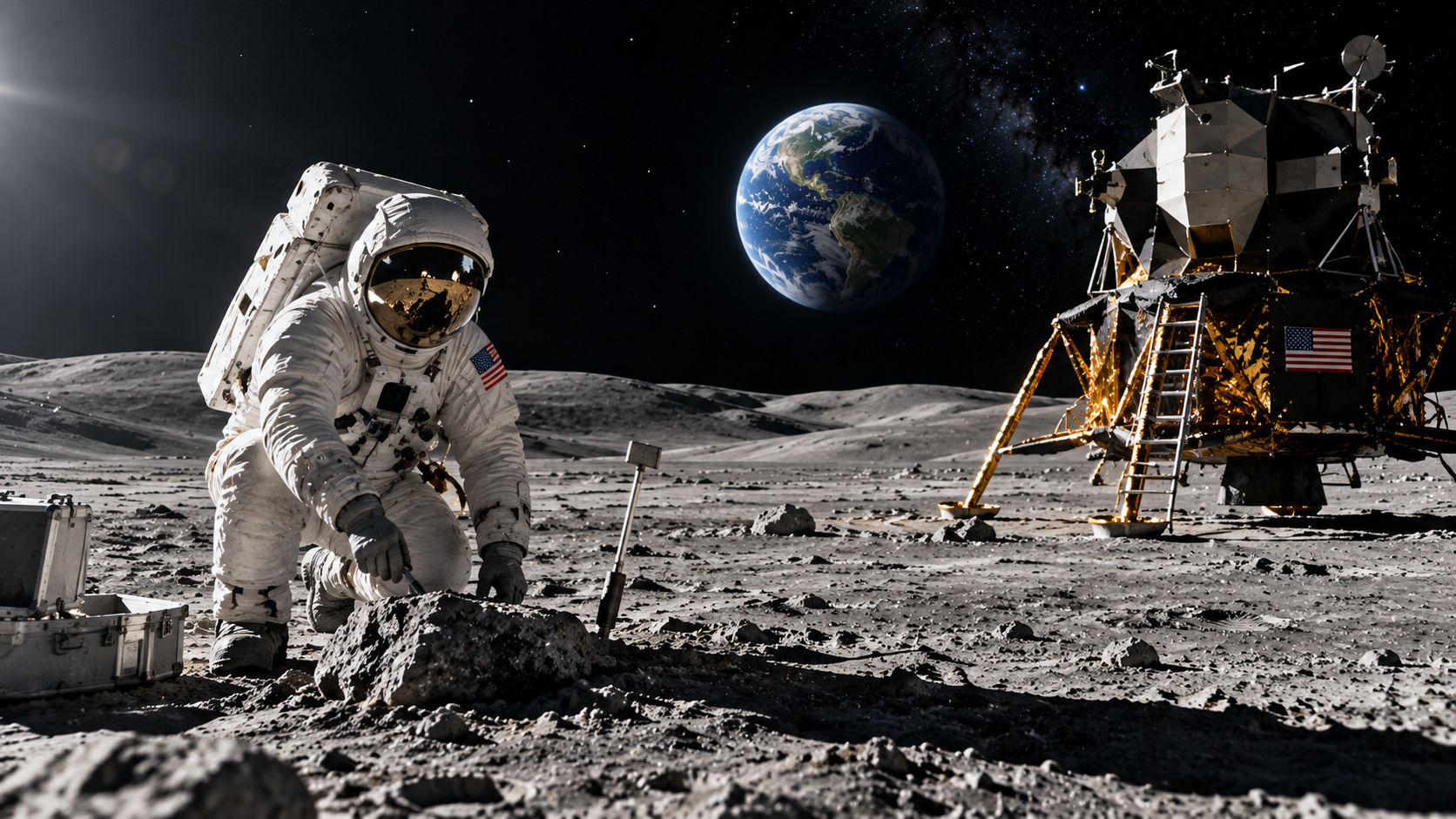
HUMAN EXPLORATION
Robotic missions first revealed the lunar environment. Later, human missions demonstrated that people could travel to another world, work there and return safely.
Robotic exploration
Lunar mapping
Sample collection
Future surface missions
EXPLORATION STATUS
● ACTIVE ERA
LUNAR FRONTIER
Return to the Moon
LUNAR EXPLORATION
More than six decades of robotic and human exploration have transformed the Moon from a distant object into a destination.
Luna 1 became the first spacecraft to escape Earth's gravity and pass near the Moon.
Luna 9 achieved the first successful soft landing on the lunar surface.
Apollo 11 landed astronauts on the lunar surface, marking a historic moment in human exploration.
The final Apollo lunar landing brought astronauts to the Moon's surface in December 1972.
New robotic and crewed lunar programs are expanding scientific exploration and preparing for longer-term activity.
OUR NEAREST WORLD
The Moon is more than a destination from Earth's past. It may become one of the most important stepping stones toward humanity's future in space.
CONTINUE EXPLORING
Continue through the SMCC exploration network and travel farther from Earth.