SYS-01
Atmosphere
78% Nitrogen
A complex envelope of gases surrounding Earth that supports life and influences weather, climate and temperature.
Our home world.
Our laboratory.
Our starting point.
Explore the planet from a scientific perspective — from its oceans and atmosphere to the satellites watching it from orbit.
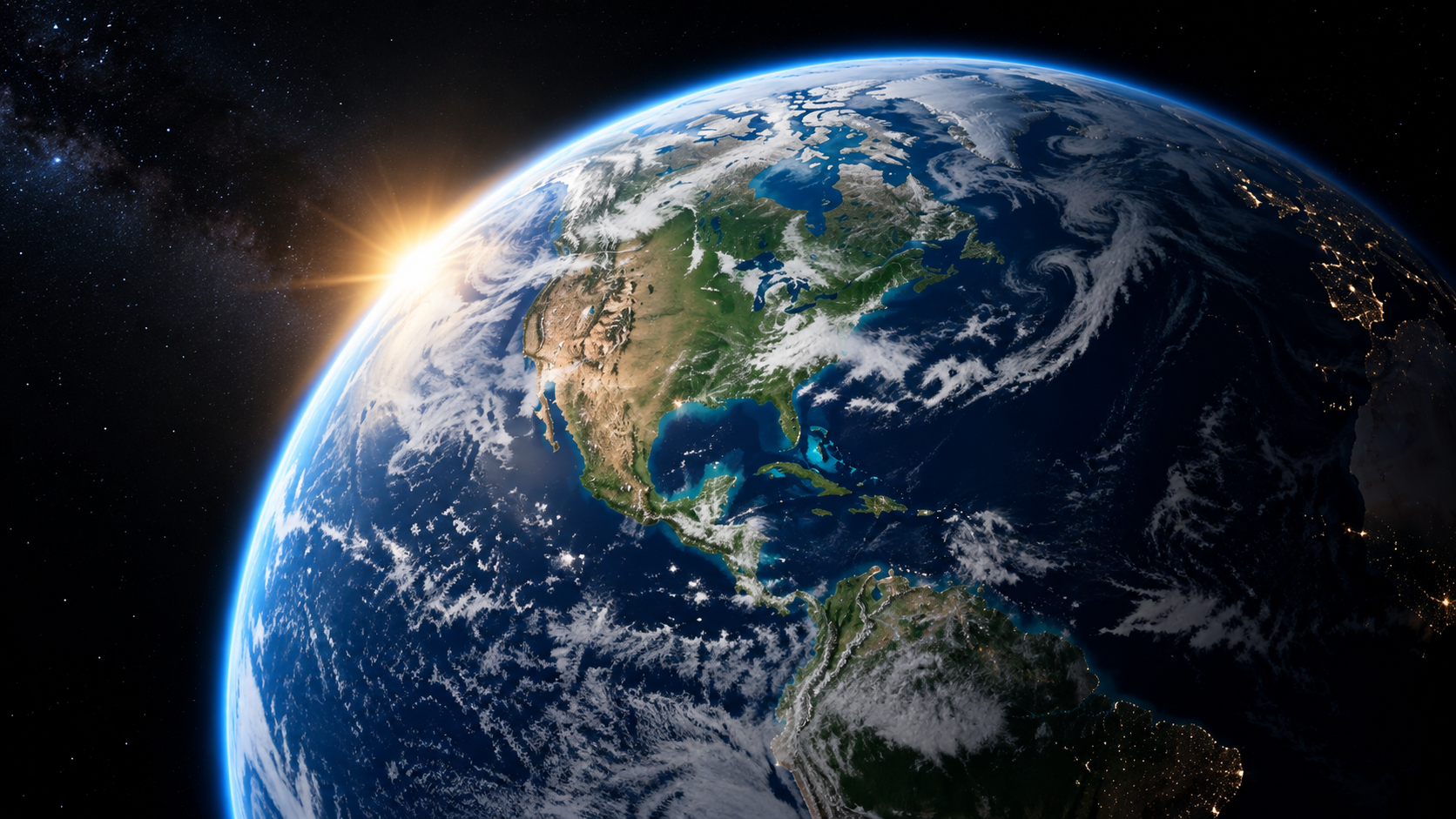
VISUAL ARCHIVE
EARTH / FROM ORBIT
Planetary observation
DIAMETER
12,742 km
Equatorial planetary scale
AVERAGE TEMPERATURE
15°C
Global surface average
SURFACE WATER
71%
Approximately covered by oceans
PLANET AGE
4.54 B
Approximately billion years
PLANETARY SYSTEMS
Earth is not a collection of isolated parts. Its atmosphere, oceans, land and living organisms interact continuously.
78% Nitrogen
A complex envelope of gases surrounding Earth that supports life and influences weather, climate and temperature.
1.386 B km³
Earth's water exists across oceans, rivers, lakes, glaciers, groundwater and the atmosphere.
Crust + Mantle
The solid parts of Earth create continents, mountains, ocean floors and the planet's dynamic interior.
Life
The global zone where living organisms interact with Earth's atmosphere, oceans and land.
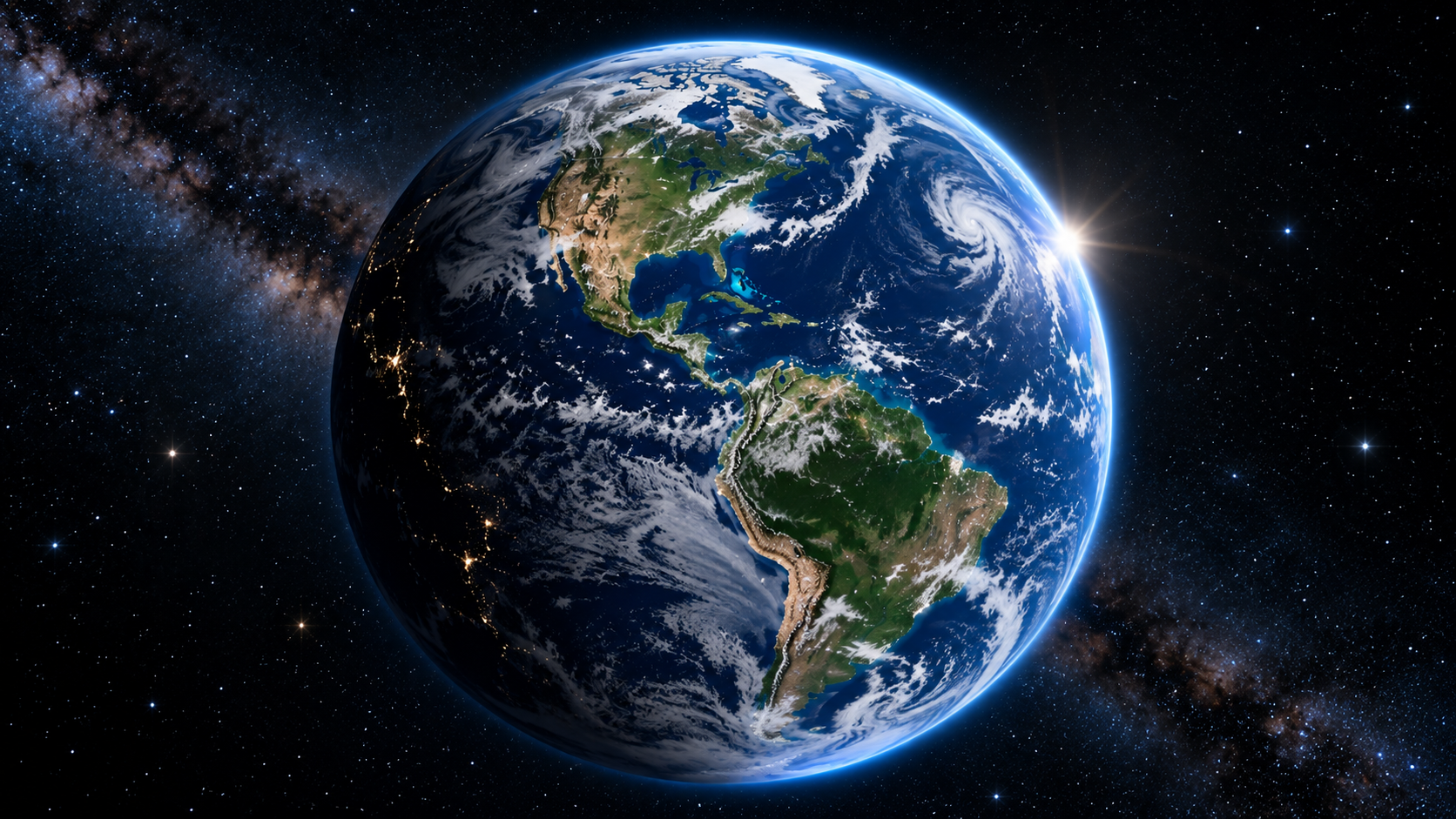
VIEW 01
Earth in Space

VIEW 02
The Blue Planet
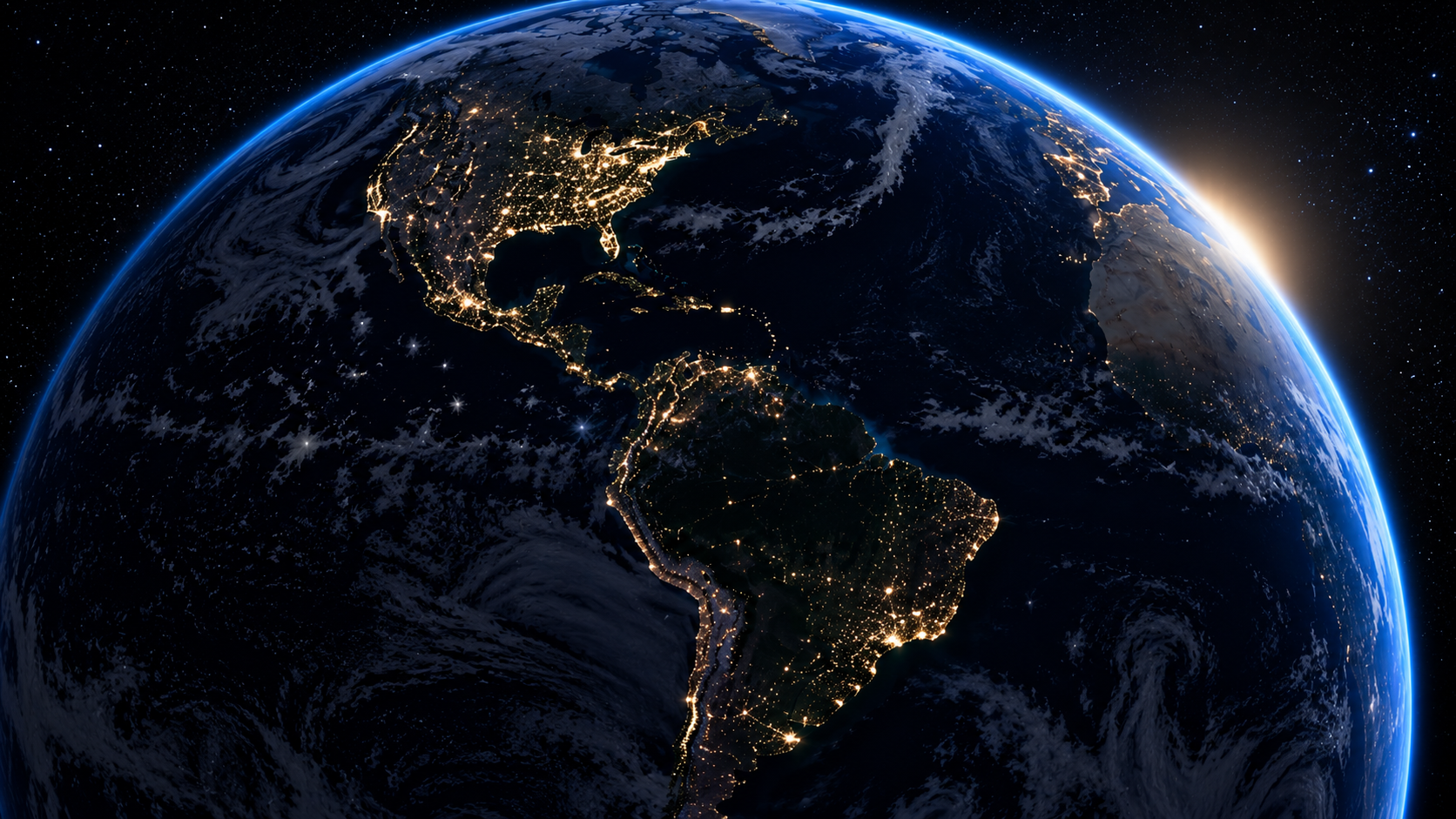
VIEW 03
Earth at Night
KNOWLEDGE DATABASE
Familiar from the ground. Surprisingly complex from a planetary perspective.
Earth is slightly flattened at the poles and wider around the equator because of its rotation.
Earth completes one rotation relative to distant stars in about 23 hours and 56 minutes.
Its magnetic field helps protect the planet from charged particles carried by the solar wind.
The Moon's gravitational influence plays an important role in Earth's ocean tides.
Our planet rotates, travels around the Sun and moves together with the Solar System through the galaxy.
Large portions of the deep ocean remain difficult to study directly, making Earth itself an exploration frontier.
PLANETARY INTERIOR
From surface to core
INTERNAL ARCHITECTURE
Earth's surface is only the beginning. The planet has several major internal layers, each with different physical properties.
The thin outer layer containing continents, ocean floors and the environments where humans live.
A huge region of extremely hot rock whose slow movement contributes to geological activity.
A liquid metallic layer closely associated with Earth's magnetic field.
The dense central region of Earth under enormous pressure and extreme temperature.
ORBITAL OBSERVATION
Satellites transform Earth into a continuously observed scientific environment. From orbit, spacecraft can study enormous areas that are difficult to observe from the ground.
Weather systems
Ocean conditions
Forest coverage
Ice and snow
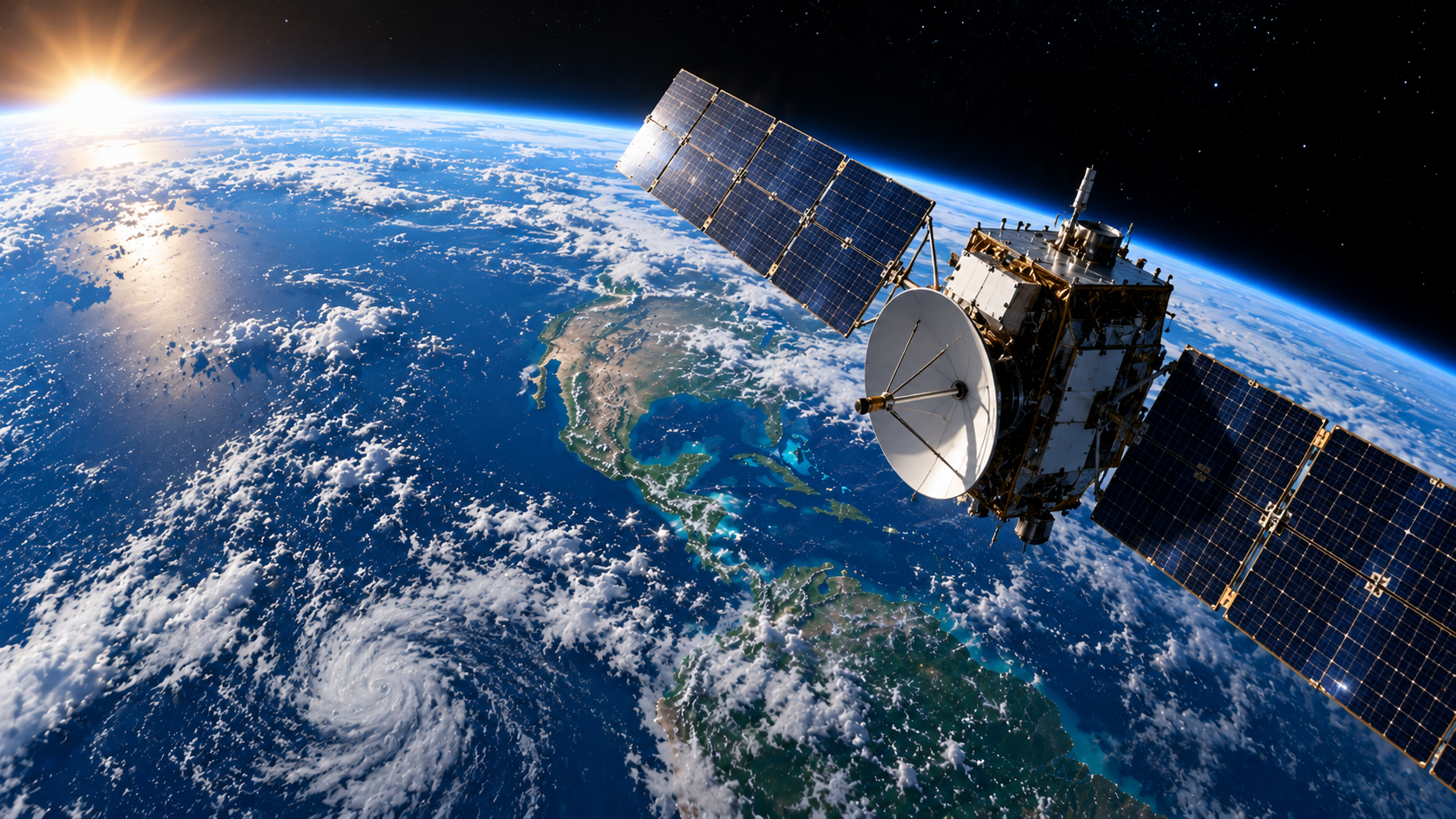
OBSERVATION NETWORK
● OPERATIONAL
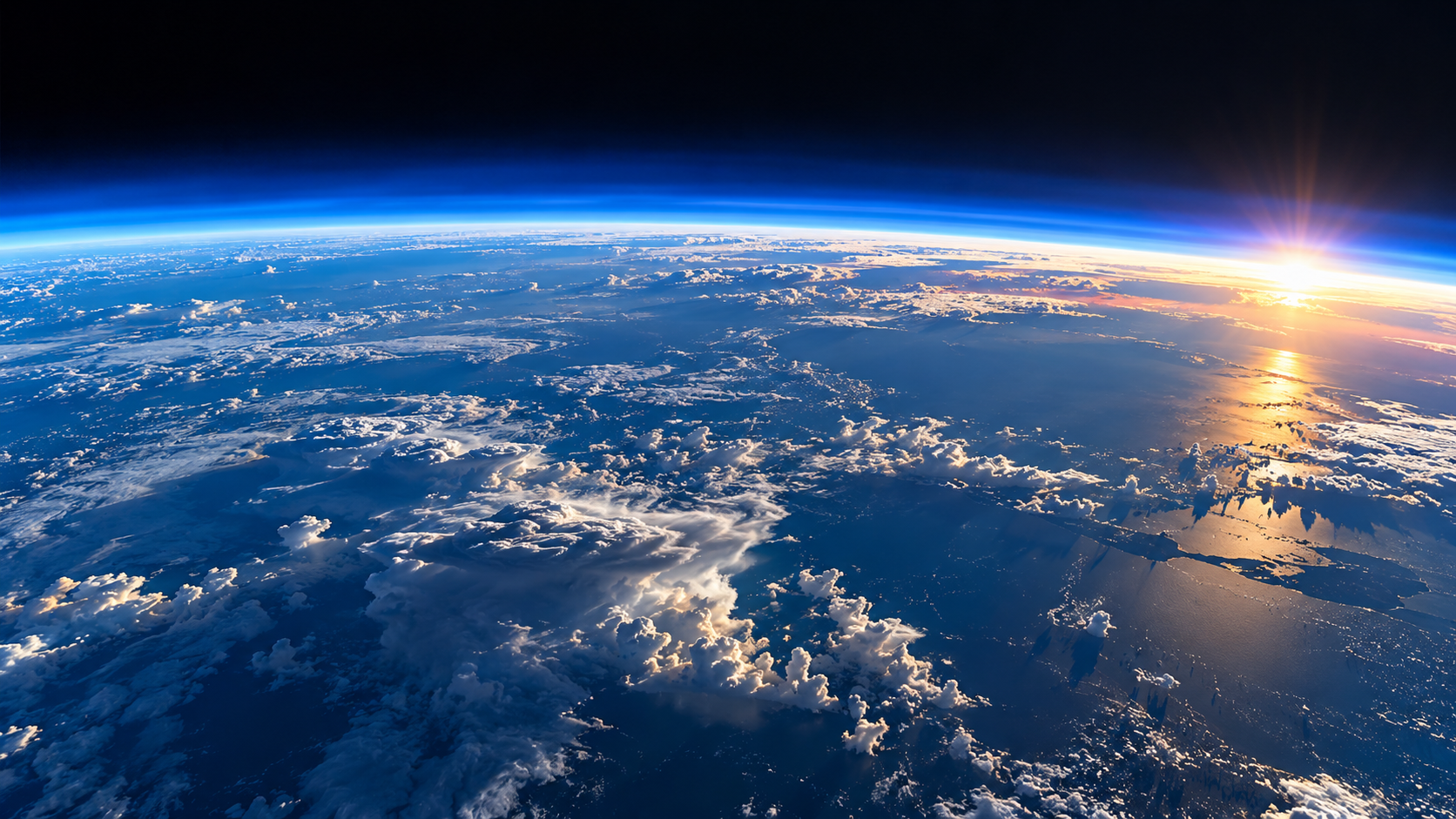
ORBITAL VIEW
Earth Observation
HUMAN SPACEFLIGHT
Space exploration did not only take humanity farther from Earth. It also changed how we understood our own planet.
The first artificial satellite entered Earth orbit and began the satellite age.
Human spaceflight provided the first opportunity to experience Earth from above.
Apollo 17 astronauts captured one of the most influential full-Earth photographs.
International partners began building a permanent research laboratory in low Earth orbit.
Modern spacecraft continuously observe Earth's atmosphere, oceans, land, ice and weather.
THE HOME WORLD
Earth is the first destination in every space journey — the place every spacecraft leaves from and eventually returns to.
NEXT DESTINATIONS
Continue through the SMCC exploration network and discover our nearest worlds and the universe beyond.