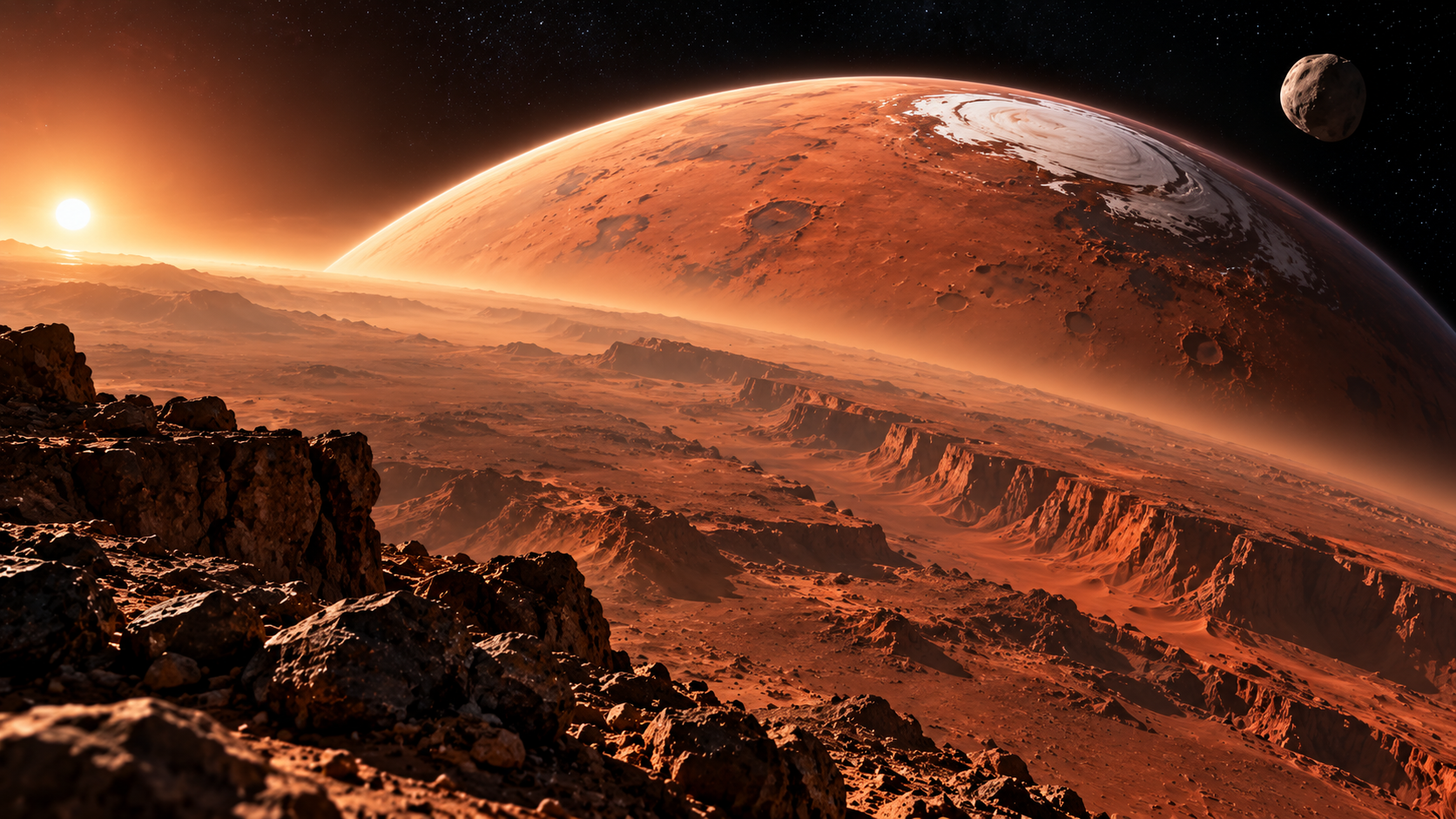
Mars
A colder world.
A brighter tomorrow.
Explore the Red Planet — a world of ancient rivers, towering volcanoes, deep canyons and one of humanity's most important frontiers beyond Earth.
Diameter
6,779 km
About 53% of Earth's diameter
Average Distance
225 million km
Distance varies with orbit
Surface Gravity
3.71 m/s²
About 38% of Earth's gravity
Orbital Period
687 days
One Martian year
Martian Systems
A planet
of possibilities
Mars is a world of extremes — vast deserts, towering mountains, ancient valleys and evidence of water. Its history may hold clues to one of the biggest questions in science.
Discover Martian SystemsMartian Surface
Deserts, volcanoes & canyons
Mars contains vast dusty plains, enormous volcanoes, impact craters and one of the largest canyon systems in the Solar System.
Ancient Water
Rivers, lakes & ice
Evidence suggests that ancient Mars once had flowing water, lakes and possibly long-lived environments capable of supporting chemistry associated with life.
Cold Environment
A harsh planetary climate
Mars has a thin atmosphere and extreme temperatures, making the surface a challenging environment for robotic and future human missions.
Potential for Life
Searching for evidence
Mars remains one of the most important places in planetary science for investigating whether life may have existed beyond Earth.
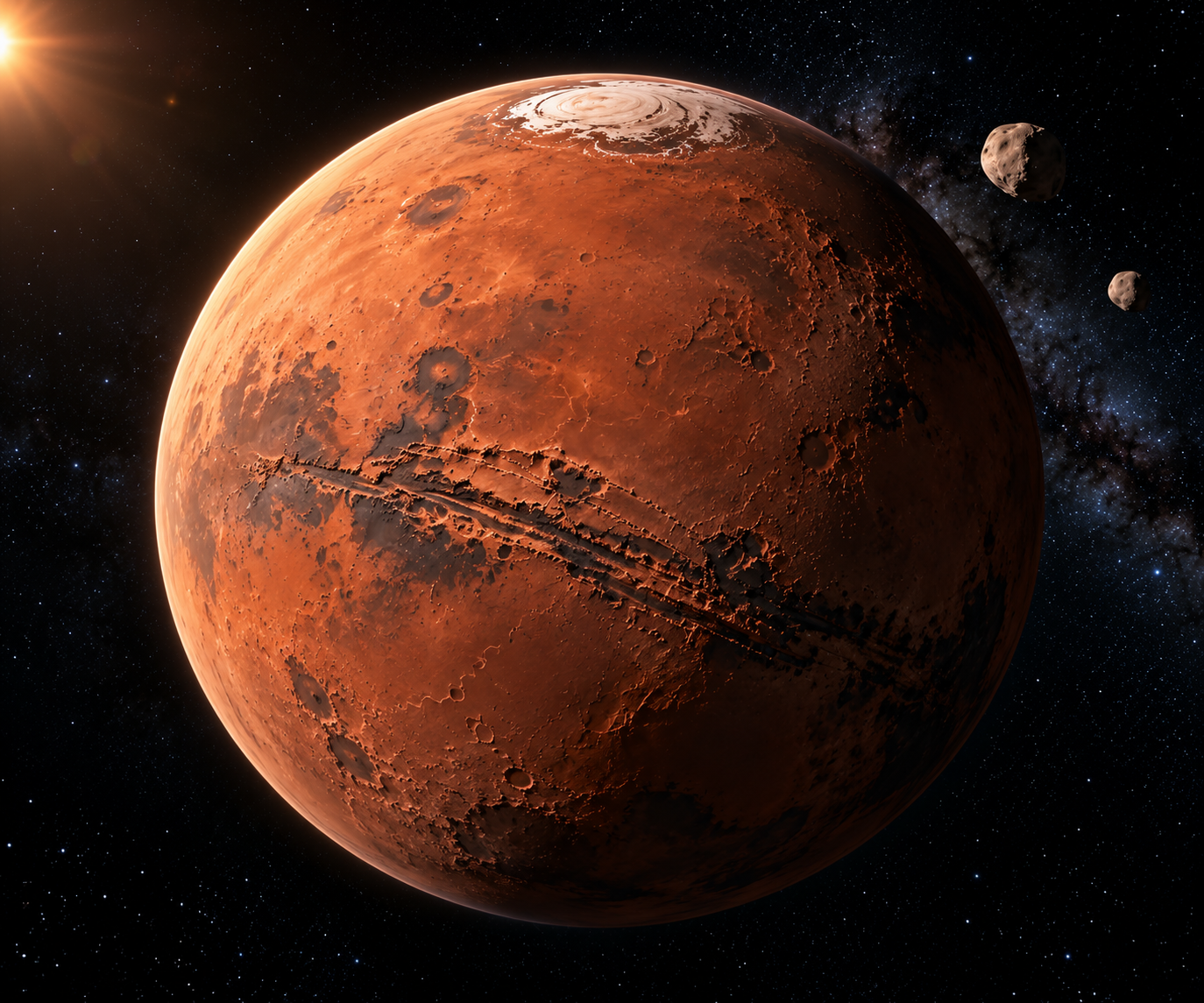
01 / GLOBAL VIEW
The Red Planet
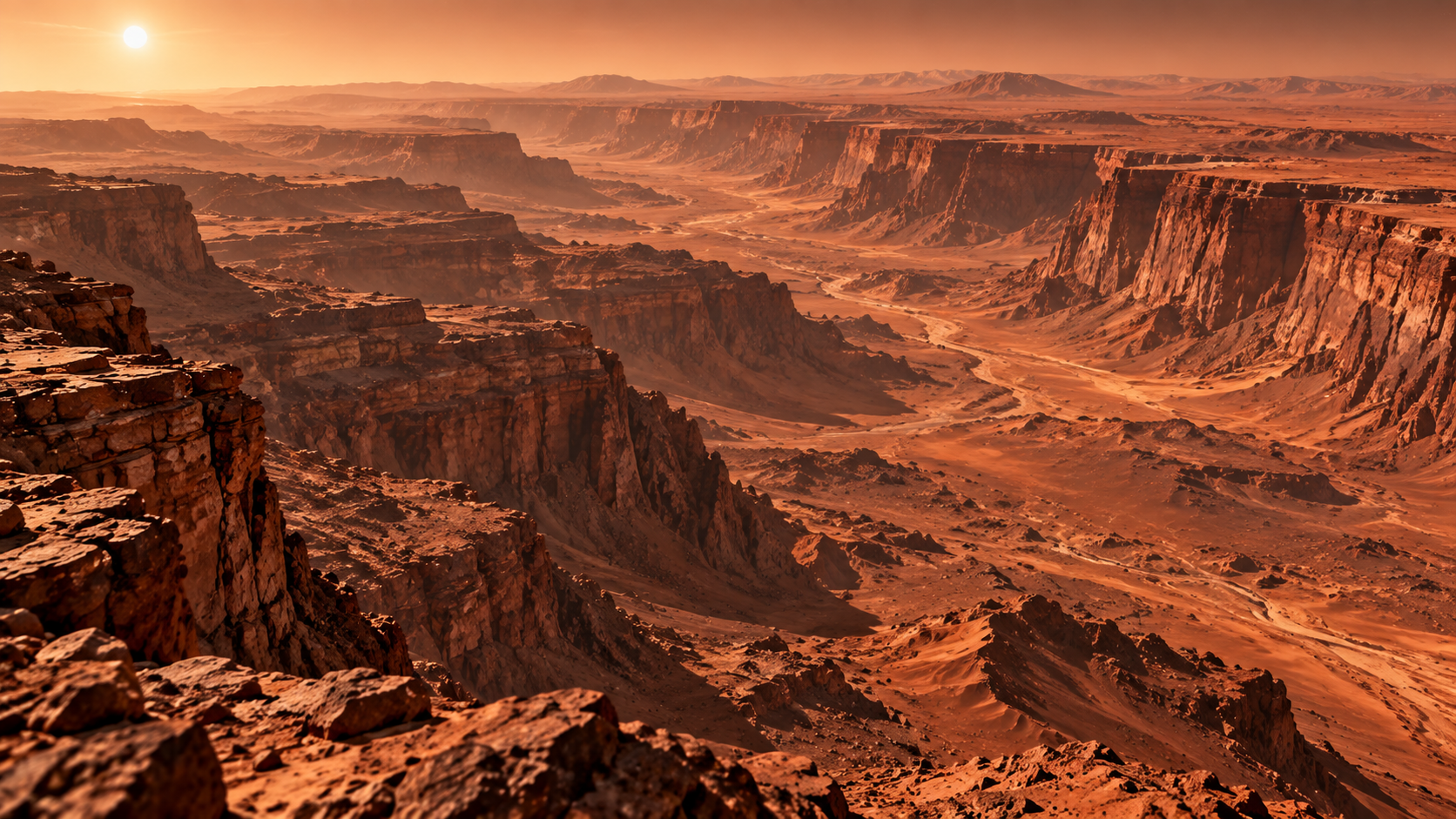
02 / VALLES MARINERIS
A giant canyon system
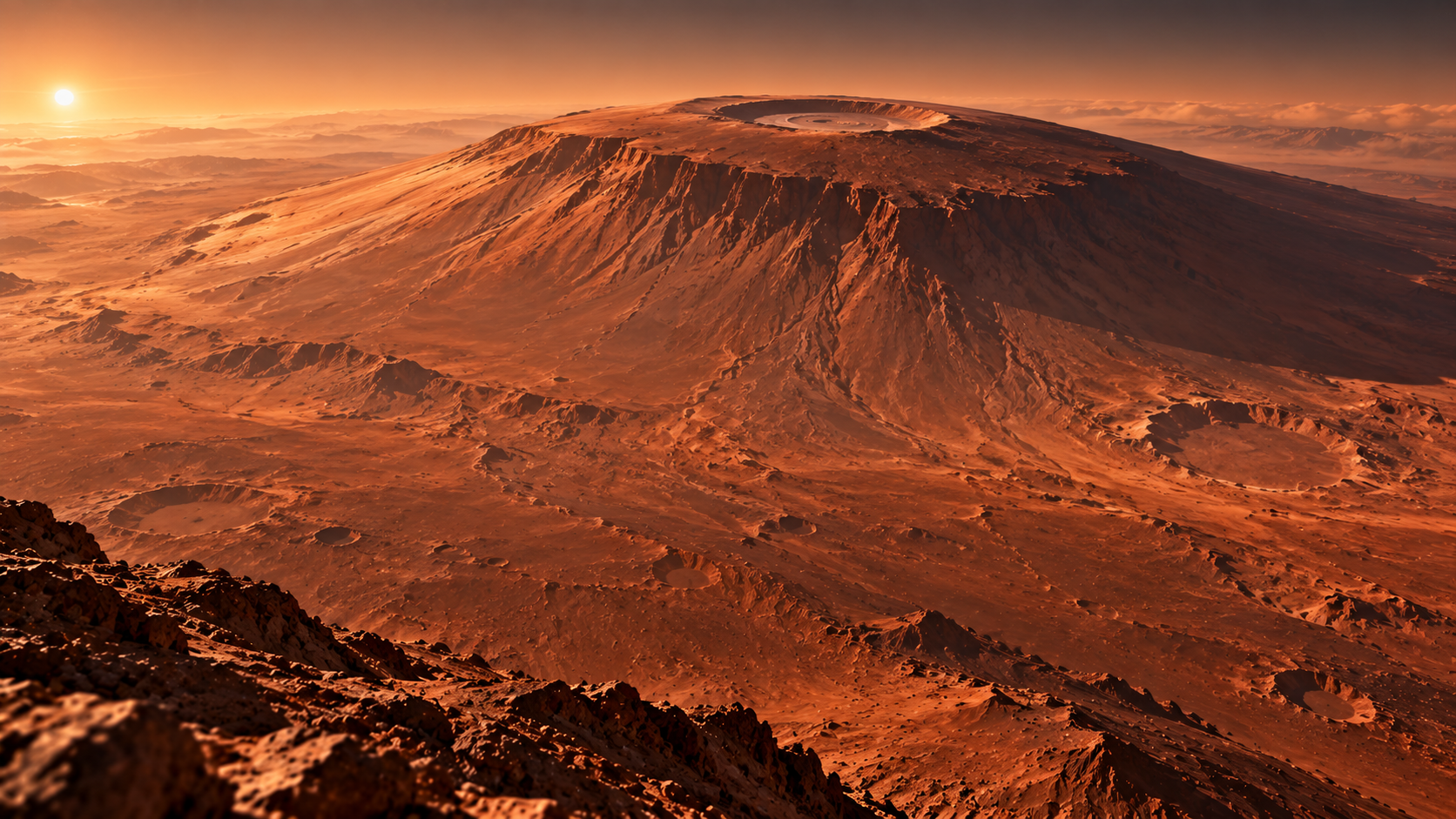
03 / OLYMPUS MONS
The Solar System's giant volcano
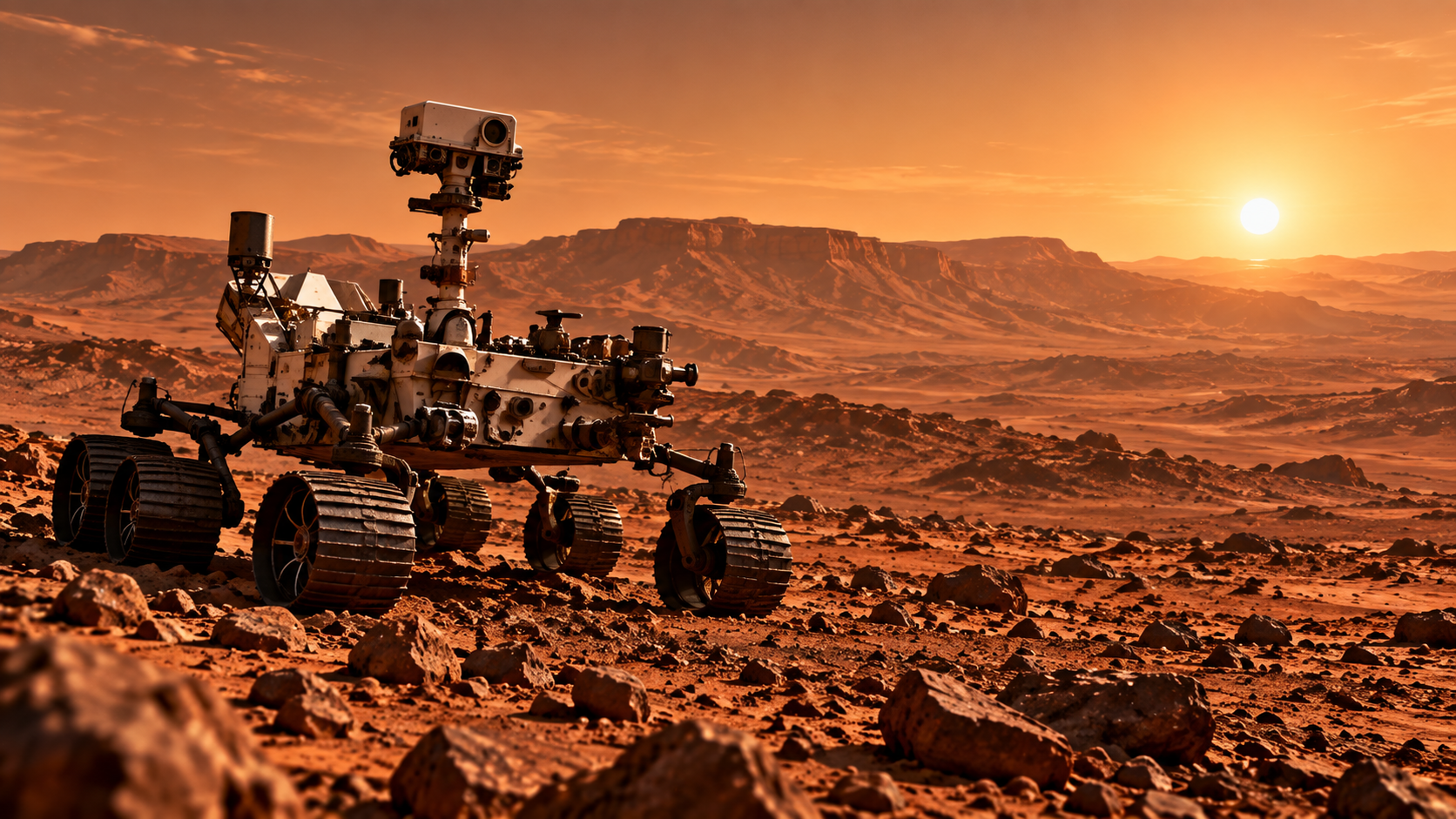
04 / MARTIAN ROVER
Exploring the surface
Mars Facts
Did you know?
A closer look at the strange and fascinating characteristics of our neighboring planet.
Martian Seasons
Mars has seasons because its rotational axis is tilted, much like Earth.
Dust Storms
Mars can experience enormous dust storms that sometimes spread across much of the planet.
Water Ice
Water ice exists at the Martian poles and in subsurface regions.
Olympus Mons
Olympus Mons is the largest known volcano in the Solar System.
Longer Days
A Martian sol lasts about 24 hours and 39 minutes.
Thin Atmosphere
Mars has a thin atmosphere composed mostly of carbon dioxide.
Exploration
Robotic pioneers.
Human horizons.
From early flybys to sophisticated robotic laboratories, Mars exploration has transformed our understanding of the Red Planet. Every rover adds another piece to the story.
Key Milestones
Decades of discovery
1964
First successful Mars flyby
Mariner 4 returned the first close-up images of Mars.
1971
First successful Mars orbit
Mariner 9 became the first spacecraft to orbit another planet.
1976
Viking lands on Mars
Viking 1 and Viking 2 performed major surface experiments.
1997
Mars Pathfinder
The mission delivered the Sojourner rover to the Martian surface.
2012
Curiosity arrives
Curiosity began investigating Gale Crater and ancient Martian environments.
2021
Perseverance rover
Perseverance began searching for signs of ancient microbial life and collecting samples.
FUTURE
Human exploration
Future missions may eventually send humans to Mars.
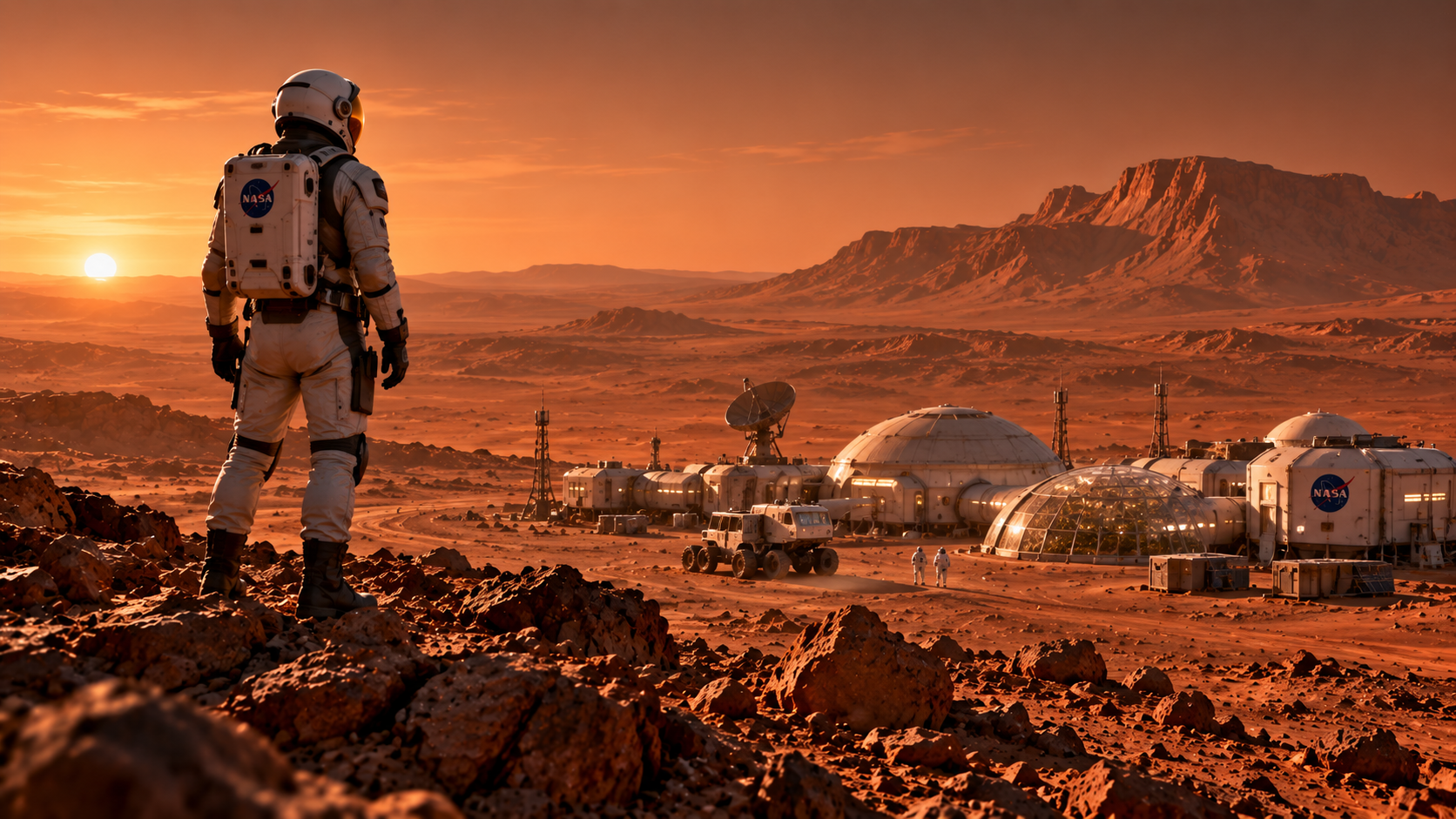
The Next Frontier
One day,
humans may live here.
Mars could become humanity's first major destination beyond the Earth-Moon system. Future exploration will need new technologies for transportation, habitats, energy, food and survival.
Continue Exploring
The next world awaits.
Mars is only the beginning. Continue exploring destinations across our Solar System and beyond.